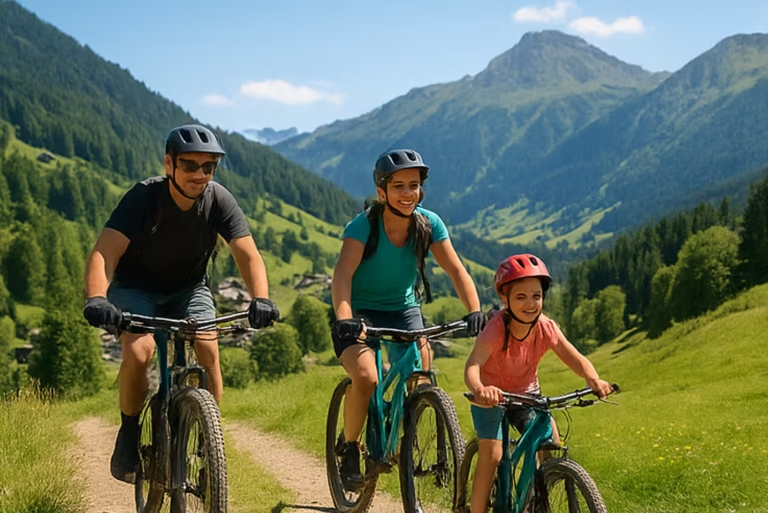
Birds of the Alps 4 emblematic species to observe
Discover 4 emblematic birds of the Alps and meet these sentinels of the Alpine sky, between wild ridges, deep forests and breathtaking panoramas in the heart of the mountains.

Birds of the Alps 4 emblematic species to observe
Introduction
Discover 4 emblematic Alpine birds: bearded vulture, black grouse, spotted nutcracker and golden eagle. A breathtaking journey to the heart of Alpine fauna.
Proud silhouettes in the clear sky, songs echoing in the valleys, the birds of the Alps embody the wild soul of the mountains. On a hike or from a sunny terrace, it's sometimes enough to look up to witness a majestic ballet. Each species tells a story, embodies an ecosystem and defies the laws of altitude. From rocky peaks to spruce forests, these rare or familiar birds reveal the natural richness of a preserved territory. Learning to recognize them is a new way of exploring the peaks. Because mountains are as much about listening as they are about contemplating.
Birds of the Alps: 4 emblematic species to spot in the mountains
Watching the bearded vulture: the giant of the air
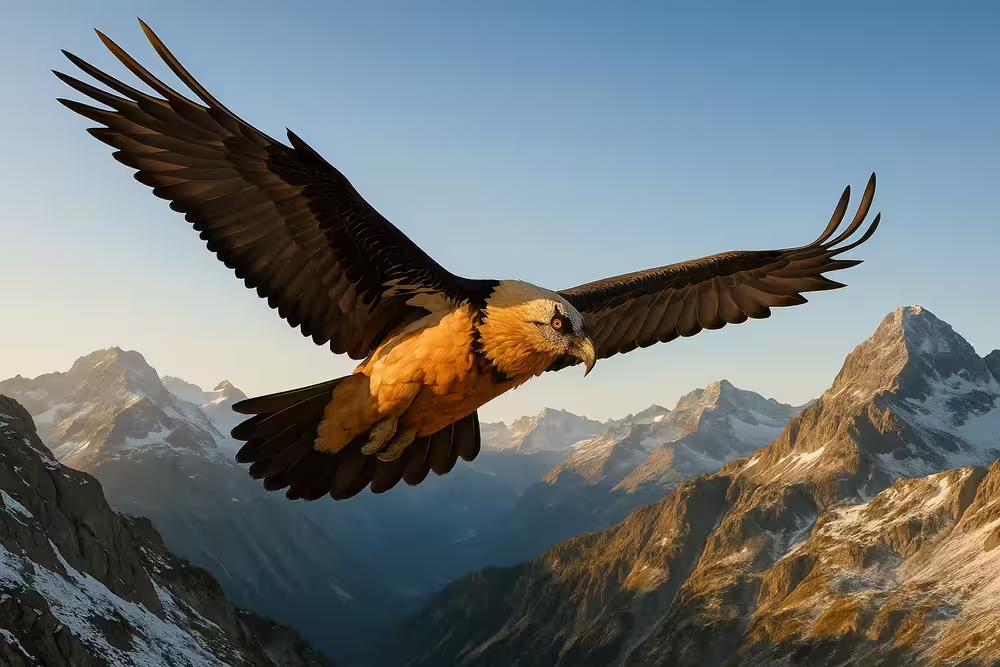
Impressive in stature, the bearded vulture reigns over the Alpine skies with silent majesty. With a wingspan of up to three meters, it is one of Europe's largest birds of prey. Easily recognized by its slender silhouette and diamond-shaped tail, it glides effortlessly over the peaks. Its red and black shaded plumage, coupled with its distinctive beard, gives it an almost mythological allure. This fascinating bird has long been the victim of mistaken beliefs, but it is now the subject of an ambitious reintroduction program in the French Alps.
Its natural habitat lies between 1,500 and 3,000 meters above sea level. The lammergeier prefers steep cliffs for nesting and remote valleys for feeding. A specialized scavenger, it feeds exclusively on bones, which it breaks by hurling them from the air onto rocks. This unique feeding strategy plays an active role in regulating the health of mountain ecosystems. In fact, it's nicknamed the “cleaner of the peaks”. Its ecological role is as important as it is little-known.
In the Parc national des Écrins and around Les 2 Alpes, it's possible to catch a glimpse of it on certain high-altitude hikes, particularly in the Lac du Lauvitel and Muzelle areas. Patience and binoculars are your best allies if you want to make out its distinctive silhouette against the blue sky. When it soars, its majestic flight is never disturbed by the flutter of its wings. A rare but unforgettable sight, engraved in the memories of alpine wildlife enthusiasts.
Protecting the lammergeier also means preserving its biotope. Information panels in nature reserves remind us of the importance of keeping our distance, avoiding motorized overflights and staying on marked trails. Reproduction is fragile and late in the season, requiring calm and discretion. Thanks to the efforts of parks, associations and European programs, numbers are slowly but surely increasing. Seeing a bearded vulture today is more than just a privilege: it's a testament to the restored balance between nature and human respect.
Birds of the Alps: 4 emblematic species to spot in the mountains
The golden eagle: winged majesty of the Alpine peaks
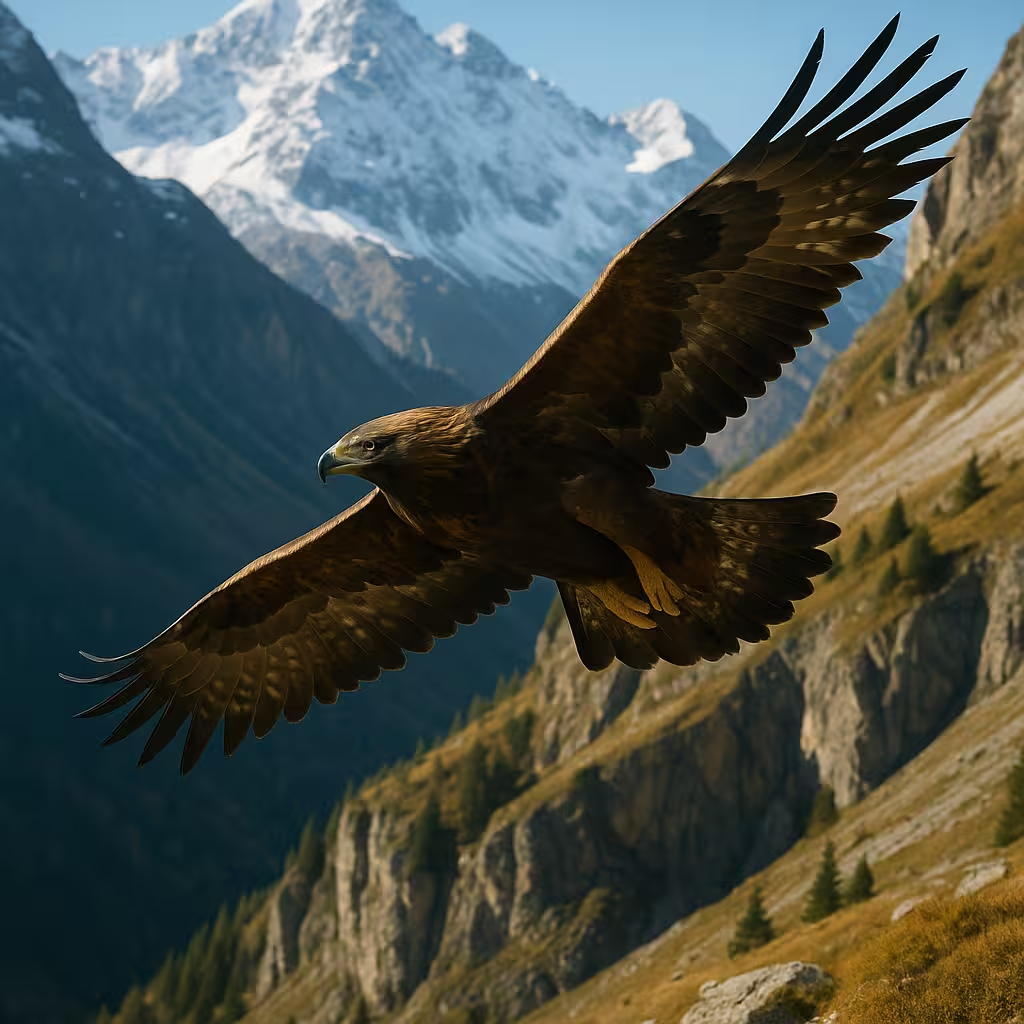
Lord of the Alpine skies, the golden eagle reigns silently over rocky ridges and deep valleys. Its impressive wingspan, up to 2.30 meters, makes it instantly recognizable. This emblematic raptor flies over high altitudes in search of prey, its piercing gaze picking up the slightest movement up to two kilometers away. Nestling on inaccessible ledges, it watches over its territory with authority, faithful to an area it often occupies for several years at a time.
A symbol of power and freedom, the golden eagle is also a valuable indicator of the health of mountain ecosystems. It feeds mainly on marmots, hares and sometimes carrion, playing a regulating role in the food chain. The pair, united for life, raises one or two eaglets a year, in a monumental nest made of branches and wool. This slow reproductive cycle makes this species particularly sensitive to human disturbance, especially during the rearing period.
Watching it in flight is a rare experience, often marked by emotion. It circles above the cliffs, using the updrafts to glide effortlessly. Its majestic glide, interspersed with powerful flapping movements, impresses as much as it inspires. In certain seasons, it can even be seen over the southern slopes of the Écrins massif, particularly in the Vénéon valley, where it finds abundant prey and peace and quiet.
The golden eagle is more than just a silhouette in the sky. It embodies the wild soul of the Alps, a profound link between the mineral and the living. Its presence, discreet but constant, invites humility. For in the vertical realm that is the mountains, even the most powerful of birds depends on the fragile balance between biodiversity, protected space and respect for silence.
Birds of the Alps: 4 emblematic species to spot in the mountains
The black grouse: a discreet emblem of Alpine forests
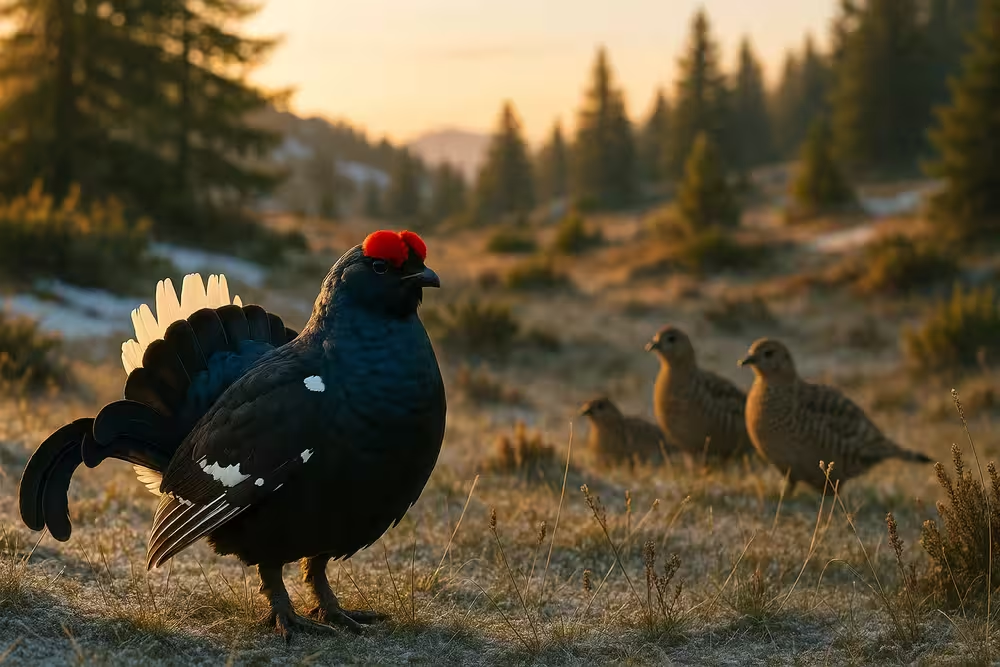
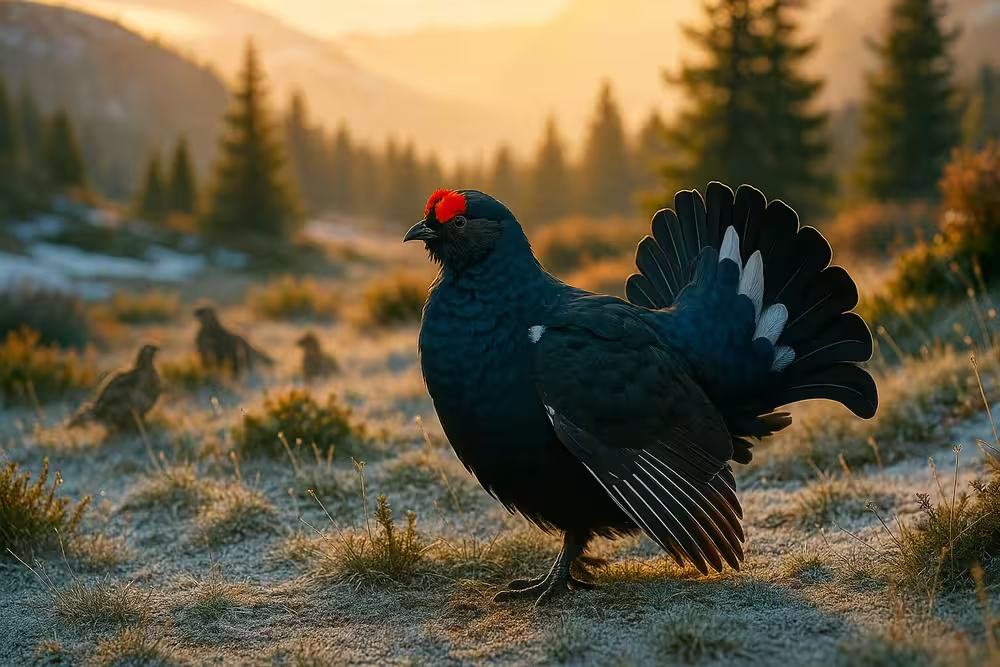
Silent and shy, the black grouse inhabits the clearings and undergrowth at altitude, where the mountains soften into meadows and sparse copses. This galliform, with its dark plumage and bluish reflections, captivates with its spectacular mating dance. Every spring, at dawn, the males compete with elegance and raucous cries to win a female. Their lyre-like display of feathers, to which the bird owes its name, evokes ancestral rituals from another world. To observe it in its natural environment is a privilege, as it shuns the presence of man.
The grouse feeds mainly on berries, young shoots and conifer needles. Its presence is a valuable indicator of habitat quality. It frequents the transition zones between forest and alpine pasture, particularly on less exposed slopes. In winter, it buries itself in snow igloos to protect itself from the cold, a survival strategy that illustrates its astonishing adaptation. This discreet bird requires dense plant cover, undisturbed by human activity.
Around Les 2 Alpes, the Venosc slopes, the wooded slopes of the Muzelle valley and the Lauvitel nature reserve provide favorable refuges. To hope to come across it, you need to walk early, move slowly, and avoid sensitive periods such as breeding or wintering. Tracks in the snow, twisted droppings and sudden wingbeats are often the only clues to its presence.
Today, the black grouse is threatened by the fragmentation of its habitat, the expansion of tourist infrastructures and disturbance during critical periods. Quiet zones have been set up in certain areas to preserve it. Keeping a low profile, staying on the trails and observing from a distance are essential. The contemplation of this wild jewel invites restraint, and reminds us that natural balances are based on extreme delicacy.
Birds of the Alps: 4 emblematic species to spot in the mountains
The speckled nutcracker: guardian of high-altitude forests
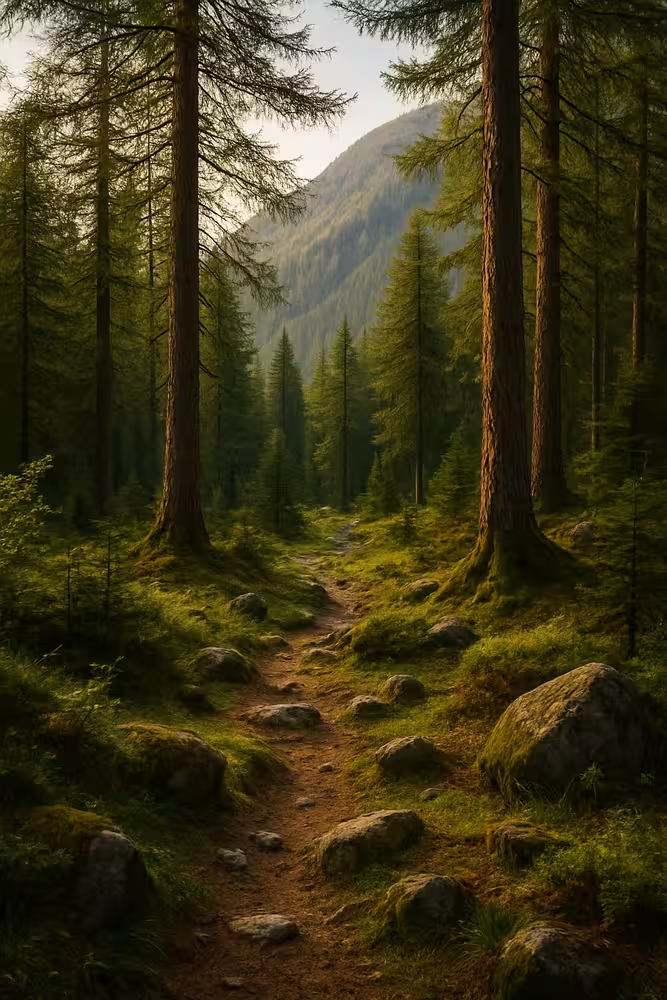
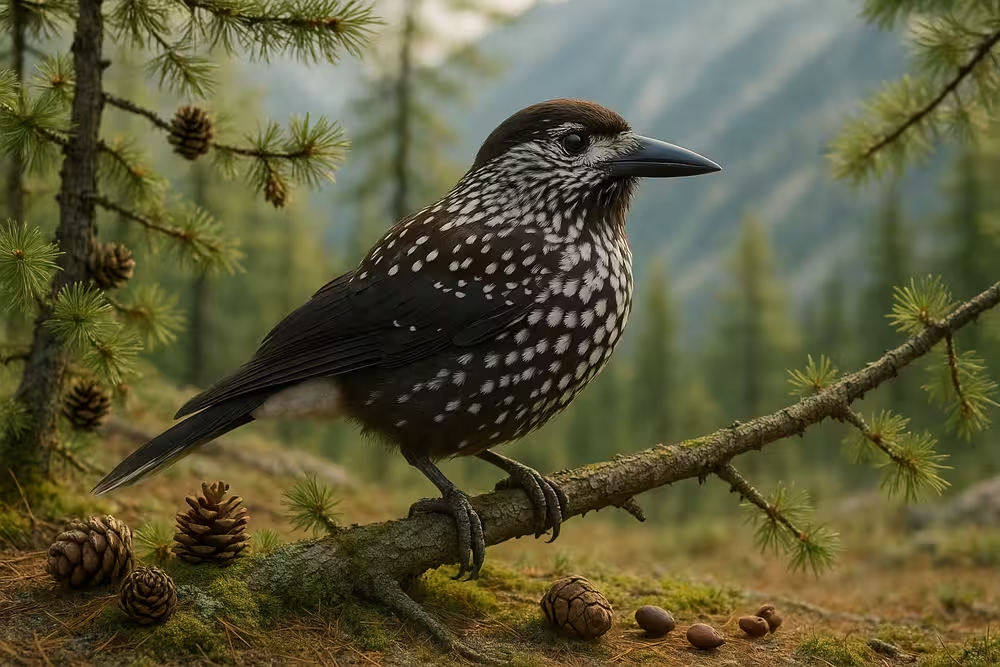
Discreet but indispensable, the speckled nutcracker inhabits the wooded areas of the Alps between 1000 and 2200 meters. This small corvid, with its brown plumage speckled with white, has a powerful, tapering beak, designed to break conifer cones. It plays a major ecological role by disseminating the seeds of cembro pines, particularly in the sub-alpine forests of the Oisans and Écrins ranges. A true mountain gardener, every autumn it buries several thousand seeds, unknowingly ensuring the regeneration of its habitat.
Its hoarse, piercing call signals its presence in sunny clearings or forest edges. Whether solitary or in pairs, they are constantly moving back and forth between the trees and their hiding places, where they meticulously store their harvest. This behavior enables it to survive the long Alpine winters, when snow covers all food sources. Its phenomenal memory enables it to find most of its reserves, although some forgotten seeds contribute to the growth of new trees.
The nutcracker is not only a tireless sower. It also symbolizes the interdependence between the flora and fauna of the Alps. Without it, the cembro pine, an emblematic species of the high Alps, would have great difficulty in developing beyond certain altitudes. Its territorial fidelity makes it an excellent indicator of the evolution of forest environments in the face of climate change. Watching it requires patience and discretion, often rewarded by a glimpse between the trunks or a quick glance from a branch.
In the silence of alpine mornings, when the mist still clings to the peaks, spotting the nutcracker becomes a suspended moment. It embodies the subtlety of natural balances, the beauty of the ordinary and the power of detail. As the seasons pass, he weaves an invisible link between mountains, forests and living things, reminding us that biodiversity also resides in the minute gestures of the Alps' humblest inhabitants.
Conclusion
To observe the birds that are emblematic of the Alps is to immerse yourself in the very essence of the mountains. Each encounter is a lesson in patience, silence and respect. From the piercing cries of the lammergeier to the swooping flights of the golden eagle, these suspended moments awaken the hiker's soul. They are a reminder that high altitude is much more than a backdrop, it's a living sanctuary. To prolong this immersion and prepare for your next nature outing, explore the wilderness itineraries of the 2 Alpes and discover a natural heritage as fragile as it is exceptional. Adventure begins where the peaks sing.
Articles that may interest you
Discover the resort
Our selection of restaurants in Les 2 Alpes
Our selection of stores in Les 2 Alpes
Movies, bowling, laser tag: your indoor activities
Ski schools: our selection
Frequently asked questions
Find answers to the most common questions about our products. Julia ensures transparency, efficiency, and detailed information in everything we do.

Find the best moments from your article
Discover tips, trends and ideas to help you prepare for your stay in the mountains, and discover fantastic places and addresses. Julia and the team regularly prepare new articles for you, so don't hesitate to visit our blog regularly.