


- BLOG LOCATION2ALPES.COM
Alpine Birds: 4 Iconic Species to Spot
Set out to discover the rare and majestic birds of the Alps: find the must-see species to spot near Les 2 Alpes, with practical tips to help you make the most of this nature experience.

Universe
Location2alpes
Collection
Alpine
Reading
6 min
Share
What to read in this guide
Check out the key points from this article to plan your trip, explore the area, and organize your outing to Les 2 Alpes.
What you need to know
Alpine birds: 4 iconic species to spot, with practical tips, local ideas and useful advice for planning your stay in Les 2 Alpes
Introduction
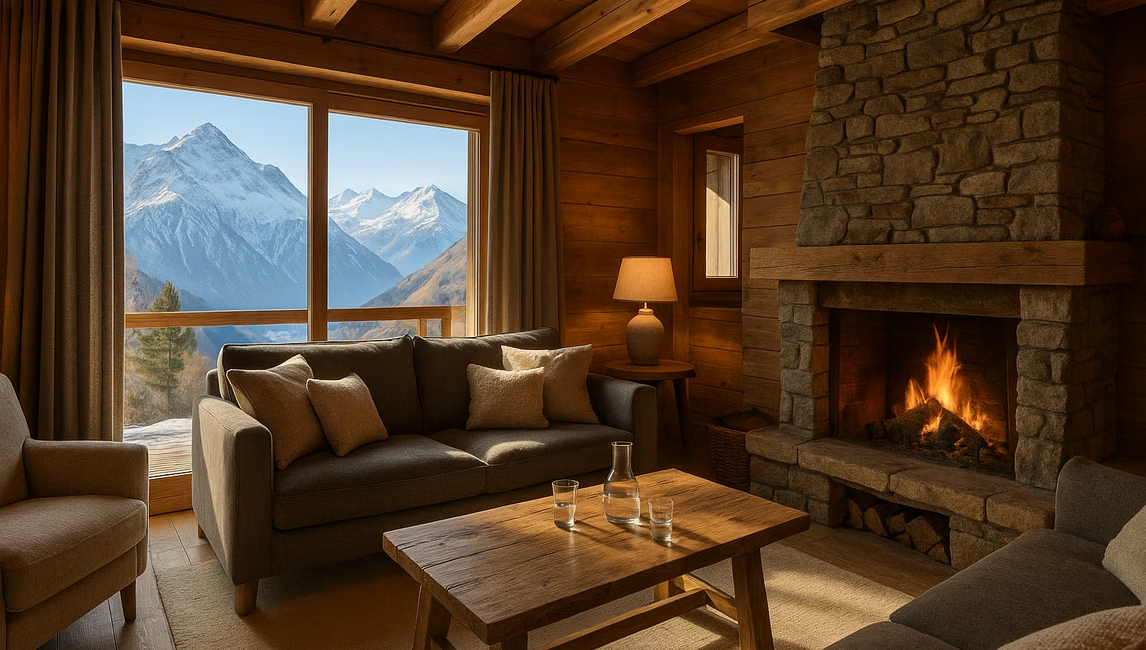
On the doorstep of the Écrins National Park, the mountains of Les 2 Alpes are much more than a ski or hiking area: they are home to remarkable wildlife, where birdwatching takes on a whole new dimension. Whether you are a nature lover, photographer, curious traveller or simply looking for rare moments, watching for emblematic birds here becomes a privileged experience, far from the beaten track.
Setting out in search of the bearded vulture, black grouse or golden eagle means glimpsing the vastness of the Alpine wilderness, as well as discovering unique encounters with nature behind every grove or cliff face. Accessible to all levels, this activity reveals another side of travel: patience, wonder and the pleasure of following the clues.
This guide will help you get off to the right start, avoid common mistakes and enjoy a successful birdwatching experience, with practical advice on the real seasons, the best areas and useful field tips. Through four emblematic species, you will discover how to maximise your chances of sightings and which habits to adopt to respect wildlife while bringing home authentic memories.
See also: Belle Etoile Jandri Les 2 Alpes.
Chapter
01
Why try birdwatching in the Alps?
Set out to discover the rare and majestic birds of the Alps: find the must-see species to spot near Les 2 Alpes, with practical tips to help you make the most of this nature experience.
Who is this experience ideal for?
Birdwatching around Les 2 Alpes is ideal for curious beginners as well as nature enthusiasts. If you enjoy exploring without necessarily climbing summits or facing extreme conditions, birdwatching gives you privileged access to wildlife, with no age barrier or specific technical skills required.
Families can turn it into a fun activity, as spotting rare plumage or learning to recognise a bird call quickly transforms a walk into a real detective game. Photography lovers benefit from unique mountain light and spectacular species that are rarely seen elsewhere. Whether you are passing through for a hike, a wellness break or a weekend escape, the experience adapts to you: often, all you need is a little patience, binoculars and an attentive eye.
Finally, for residents or regular visitors to Les 2 Alpes looking to rediscover the area, birdwatching brings a fresh perspective on the mountains. Away from the crowds, coming across a bearded vulture or a black grouse feels like a privilege, requiring nothing more than looking carefully at the right time and in the right place.
To compare options: Apartments to rent.
The Oisans massif, very close to Les 2 Alpes, combines two major advantages for this activity: a wide variety of natural environments and low visitor pressure on secondary routes outside peak season. Between alpine pastures, high-altitude forests, cliffs and mountain streams, this mosaic of habitats attracts iconic birds that find some of their last refuges here.
The region also offers immediate access to birdwatching areas (such as the Lac du Chambon reserve or the trails around the Emparis plateau), where you may see a golden eagle soaring in flight or suddenly hear the distinctive sound of black grouse at dawn. It is also an area shaped by a strong culture of respect for wildlife, where tips shared between enthusiasts, guides and park rangers help make genuine wildlife encounters possible.
The altitude, the tranquillity of certain sites and the presence of species that have become rare elsewhere explain why birdwatching here is so rewarding, even during a simple half-day outing.
To find other suitable activities: Les 2 Alpes BLOG.
What makes birdwatching unique in Oisans and around Les 2 Alpes?
Getting started with birdwatching in the Alps around Les 2 Alpes means enjoying a subtle balance between accessible nature, guaranteed variety and the thrill of an unexpected encounter. The experience fits perfectly into every type of stay: a family outing, a contemplative pause during a hike or a relaxing moment after a sporting activity. The key? Stay open to the unexpected – because every season and every hour can bring its share of surprises in these living mountains.
To explore this further: 4 iconic Alpine birds to spot.
In short, choosing birdwatching during your stay in Les 2 Alpes means investing in moments of pure connection with nature, without any need for complex preparation, where the reward lies in patience, silence and the magic of the living world. It is also one of the most inclusive, respectful and enriching activities the mountains can offer.
Also discover: Savoyard crozets: recipes, origins and gourmet ideas.
On this page
01
Why try birdwatching in the Alps?
02
The 4 iconic species to look for around Les 2 Alpes
03
Preparing your birdwatching outing: planning, equipment and weather tips
04
Make the most of your experience: best practices and common mistakes
Extend the experience
The Resort Guide
Plan your trip by exploring the must-see attractions in Les 2 Alpes: activities, scenery, practical tips, and top spots to help you make the most of your time at the resort.
Chapter
02
The 4 iconic species to look for around Les 2 Alpes
Set out to discover the rare and majestic birds of the Alps: find the must-see species to spot near Les 2 Alpes, with practical tips to help you make the most of this nature experience.
Introducing the 4 species and their key characteristics
Around Les 2 Alpes, four bird species attract the attention of both enthusiasts and beginner birdwatchers, thanks to their rarity and spectacular behaviour:
1. The bearded vulture: This huge vulture, nicknamed the “bone breaker”, impresses with its 2.6 to 2.9-metre wingspan. With its finely tapered wings and contrasting plumage, it is often seen above cliffs or open valleys, searching for the bones it feeds on. It is recognisable by its silent flight and orange tones.
2. The golden eagle: A symbol of the Alps, it patrols rocky foothills and high-altitude alpine pastures. Its wingspan of up to 2.2 metres, massive head and powerful silhouette make it instantly recognisable. Nicknamed the “lord of the sky”, it mainly hunts marmots.
3. The black grouse: More discreet but just as iconic, it lives on wooded slopes and high-altitude clearings. The male is easiest to spot during spring courtship displays, thanks to its glossy black feathers and lyre-shaped tail. Their calls combined with their early-morning dances are unique.
4. The alpine chough: An acrobatic bird of the summits, it lives in flocks and stands out with its glossy black plumage, bright yellow beak and winding calls. It is frequently seen near refuges, high in the sky or perched on wind-swept ridges.
On the same theme: Alpine génépi: tips and recipes.
Bearded vulture: Look for it above the cliffs of the Emparis plateau, towards La Grave or overlooking Lac du Chambon, especially between April and September. Early morning and late afternoon increase your chances, when it follows the rising thermals.
Golden eagle: The alpine pasture areas between Les 2 Alpes and the Meije massif offer excellent viewpoints. It is most often spotted between March and July during the nesting and hunting season, although the pair lives here all year round.
Black grouse: Head for clearings on the edge of Swiss stone pine forests or rhododendron areas, in the Romanche valley or on the slopes of the Emparis plateau. The best time is dawn in spring (April-May), when the males display.
Yellow-billed chough: Easy to see in summer near resorts, mountain refuges and viewpoints above 2,000 metres, such as at the top of the Les 2 Alpes resort or on the ridges leading to the Col de Cluy. Present almost all year round, it is even more visible when hikers are scarce in the low season.
Also worth reading: 5 must-try restaurants in Les 2 Alpes.
Where and when to improve your chances of seeing them? (altitude, seasons, typical locations)
Each species offers a different spectacle: the bearded vulture’s spiralling flight, the eagle’s dives, the black grouse’s dawn display or the playful ballet of the choughs. Tailoring your outing to the species you hope to see and the time of year can really improve your chances of a successful sighting. It is often worth preparing a simple map of specific areas, or comparing your observations with those shared by other visitors on site.
To keep planning your stay: Wellness in Les 2 Alpes: the best places to go.
As you will have gathered, birdwatching around Les 2 Alpes mainly calls for good observation skills and attention to detail. Spotting one of these birds, even briefly, can turn your visit into a memorable experience. Seasonal variations – the black grouse’s spring display, the eagle’s majestic summer flights, the fleeting glimpse of a bearded vulture as it leaves its valley – are reason enough to plan several outings or vary your timings, to maximise your chances of wonderful encounters.
Another useful resource: official Les 2 Alpes website.
On this page
01
Why try birdwatching in the Alps?
02
The 4 iconic species to look for around Les 2 Alpes
03
Preparing your birdwatching outing: planning, equipment and weather tips
04
Make the most of your experience: best practices and common mistakes
Extend the experience
3600 m
Elevation of the Les 2 Alpes Glacier
Going Out in Les 2 Alpes
“The best restaurant isn't always the one with the highest rating”
Stay
A Summer in the Great Outdoors
Discover the best summer activities in Les 2 Alpes: hiking, mountain biking, high-altitude lakes, panoramic views, and mountain adventures to make the most of your stay.
Chapter
03
Preparing your birdwatching outing: planning, equipment and weather tips
Set out to discover the rare and majestic birds of the Alps: find the must-see species to spot near Les 2 Alpes, with practical tips to help you make the most of this nature experience.
Useful equipment and simple preparation for all levels
Whether you are a beginner or an experienced birdwatcher, the success of a birdwatching outing around Les 2 Alpes depends largely on good preparation, but you do not need sophisticated equipment to get started. A light pair of binoculars (8x42 or 10x42 magnification) is usually enough to admire plumage details or spot a bird perched in the distance. For enthusiasts, a spotting scope can provide extra comfort if you are heading to high-altitude meadows or ridgelines, but it is not essential for a first experience.
A small notebook or mobile app for recording your sightings is recommended: noting the date, location and behaviour of each species will help you progress and remember your encounters. Also bring clothing suited to altitude and changing weather, with layers, a windproof jacket and good walking shoes. Finally, pack water, a snack and a map of the marked trails around Les 2 Alpes — the Grand Nord, Lac du Lauvitel and Emparis plateau routes are well known for birdwatching.
Mountain weather around Les 2 Alpes changes quickly and has a major impact on the success of your birdwatching outings. Before setting off, check the local forecast: calm mornings, without strong wind or rain, offer the best opportunities, as birds are active while feeding and are more vocal.
Seasonality also affects what you may encounter. Raptors such as the golden eagle are easier to observe from spring to late summer, when they are hunting to feed their young. Bearded vultures favour steep cliffs — try your luck between March and August near rocky areas such as the Vénéon valley or around the Pic de l’Etendard. For forest wildlife (black grouse, nutcracker), early spring and the post-breeding period in autumn are ideal, when birds are calling or moving down towards areas less deeply covered by snow.
Remember to check trail accessibility before you set off (risk of lingering snowfields at altitude until June, or temporary restrictions in certain wildlife quiet zones).
Weather precautions, seasonality and on-the-ground checks
Flexibility and planning ahead are the keys to an enjoyable birdwatching experience. Adapting your equipment to the outing you have planned helps avoid disappointments: for a morning on an exposed slope, keep things light; for a longer hide session, a folding seat or tripod may prove useful. Many local guides offer themed outings around Les 2 Alpes, ideal for refining your techniques and benefiting from expert guidance. Book your slot in advance if you would like to be accompanied: introductory sessions are very popular in peak season.
If you are heading out independently, remember to tell someone close to you about your mountain route and take a spare battery for your phone. Finally, familiarise yourself with hiking etiquette and the neighbouring Natura 2000 areas: some zones may be temporarily closed to protect sensitive sites or the broods of rare species. Getting information locally from tourist offices or Écrins National Park rangers will help ensure a safe outing that respects the local environment.
On this page
01
Why try birdwatching in the Alps?
02
The 4 iconic species to look for around Les 2 Alpes
03
Preparing your birdwatching outing: planning, equipment and weather tips
04
Make the most of your experience: best practices and common mistakes
Stay tuned on Location2alpes
A Live Preview
to get a sense of what to expect before coming to Les 2 Alpes
Updated data
24 hours a day, nonstop
8 Strategic Perspectives
about the resort, the glacier, and the peaks
Useful all year round
winter, summer, weather, events, ...
The Flavors of Les 2 Alpes
Cozy dining, mountain cuisine, terraces with panoramic views, and welcoming spots: explore our top recommendations for great dining in Les 2 Alpes.
Inspirations
“The best memories are rarely planned.”
— Local Guide
Chapter
04
Make the most of your experience: best practices and common mistakes
Set out to discover the rare and majestic birds of the Alps: find the must-see species to spot near Les 2 Alpes, with practical tips to help you make the most of this nature experience.
Discretion and respect for wildlife: essential tips
Birdwatching in the Alps, especially around Les 2 Alpes, is closely linked to your ability to go unnoticed. Walk quietly, avoid brightly coloured clothing and do not try to get too close to the birds: most emblematic species, such as the black grouse, are sensitive to disturbance. Arrive early or scout the area in the evening, when there are fewer people around and nature takes over again.
Using binoculars rather than moving closer is a golden rule, as is avoiding shouting, sudden noises and large groups. It is better to stop for a long time and watch from a strategic spot (a clearing, a rocky viewpoint, the shore of Lac de la Muzelle, etc.) than to keep moving along the trail. Finally, never try to feed birds or attract them with sound recordings — this disrupts their natural behaviour and could compromise their well-being, or even their breeding.
Before each outing, run through a quick checklist: check your binoculars, charge your phone and make sure you have downloaded an offline map or birdwatching guide, as mobile signal can be limited at altitude. Also be mindful of your impact: take all your rubbish back with you, use only authorised trails, and find out whether there may be young birds or nests in the area you plan to visit.
Consider bringing a list of the species you hope to see to help focus your attention: learn to recognise calls (with apps such as Merlin Bird ID or Ornitho), use a field guide to distinguish plumage at different times of year, and pack water and sun cream to avoid any unpleasant surprises. Finally, report any rare sightings to local tourist offices or via dedicated platforms: this helps improve knowledge and protect biodiversity.
Final things to check before heading out
The classic mistake is underestimating the patience required: mountain birdwatching is about time, not luck. Allow yourself quiet breaks, use them to observe your surroundings discreetly, and learn to spot signs of presence (feathers, droppings, remains of food, typical calls). Birds often reappear once calm has returned, even after you arrive — so stay ready, without becoming impatient.
To enrich your experience, why not share your sightings on your return with other enthusiasts during workshops organised in Les 2 Alpes, or join guided nature outings? These moments offer genuine exchanges and make it easier to develop good habits in the field.
In short, a successful birdwatching outing around Les 2 Alpes depends on preparation, listening and humility in the face of nature. Taking the time to get local information, respecting sensitive areas and adopting a discreet approach not only improves your chances of observing emblematic species, but also helps preserve this living heritage. Remember that every sighting, however brief, is rewarding when experienced with respect and curiosity.
On this page
01
Why try birdwatching in the Alps?
02
The 4 iconic species to look for around Les 2 Alpes
03
Preparing your birdwatching outing: planning, equipment and weather tips
04
Make the most of your experience: best practices and common mistakes
Location2Alpes Collection
Places we love to return to
Apartments selected for their location, comfort, and atmosphere, so you can enjoy Les 2 Alpes with complete freedom.
Plan Your Trip
to Les 2 Alpes
Discover our apartments, ideally located so you can make the most of your stay
Continue the adventure
Les plus beaux souvenirs commencent souvent après le dernier conseil
Conclusion
Getting started with birdwatching around Les 2 Alpes means opening a unique window onto Alpine nature and discovering four emblematic species in their natural habitat. Whether you are a complete beginner or already passionate about wildlife, this area offers a remarkable diversity of environments — forests, alpine pastures and cliffs — where every outing can become an unforgettable experience.
The key to successful birdwatching lies in preparation: knowing the best places and seasons for each species, choosing the right equipment (binoculars, mountain-appropriate clothing) and checking the day’s weather conditions. Taking the time to adopt a discreet, respectful approach is essential, both for the success of your outing and to preserve the tranquillity of local wildlife.
The area around Les 2 Alpes is an ideal natural playground: with a little patience, you may spot the bearded vulture soaring above the ridges, see a golden eagle hunting, pick out the silhouettes of black grouse at dawn or hear the calls of the Alpine chough carried on the wind. Each encounter is rare and precious, helping to strengthen your connection with the mountains.
Prepare your next outing: learn about the species and their rhythms, adapt your schedule to the best times of day, and equip yourself with patience as well as a good guidebook. The experience is well worth it: seeing these birds in their natural environment means gaining a better understanding of the fragile balance of the Alpine ecosystem and taking away wonderful memories, while respecting the nature that welcomes us.
What's next? Choose your next step
Key Points
The right choice depends on the pace of your trip and what you're looking for.
Keep your options open for impromptu evenings out.
A well-located place to stay makes dining out and getting around easier.
Practical information
Season: Summer / Winter
Reading time: 6 min
Area: Les 2 Alpes
Altitude : 1,650 m
Audience: Families, Couples, Groups
Live webcams
LES 2 ALPES
The Glacier
3,400 m above sea level
8 HD webcams
Continuous Updates
Check the weather all year round
Check out the weather, snow conditions, and atmosphere at the resort in real time.
Frequently asked questions
Find answers to the most common questions about our products. Julia ensures transparency, efficiency, and detailed information in everything we do.

Local Guide
Find the best moments from your article
The Location2alpes Blog
Discover tips, trends and ideas to help you prepare for your stay in the mountains, and discover fantastic places and addresses. Julia and the team regularly prepare new articles for you, so don't hesitate to visit our blog regularly.
Latest articles:


- Explore Les 2 Alpes
What would you like to explore ?
Get quick access to the resort's highlights, activities, top spots, and practical tips to help you plan your trip.